News
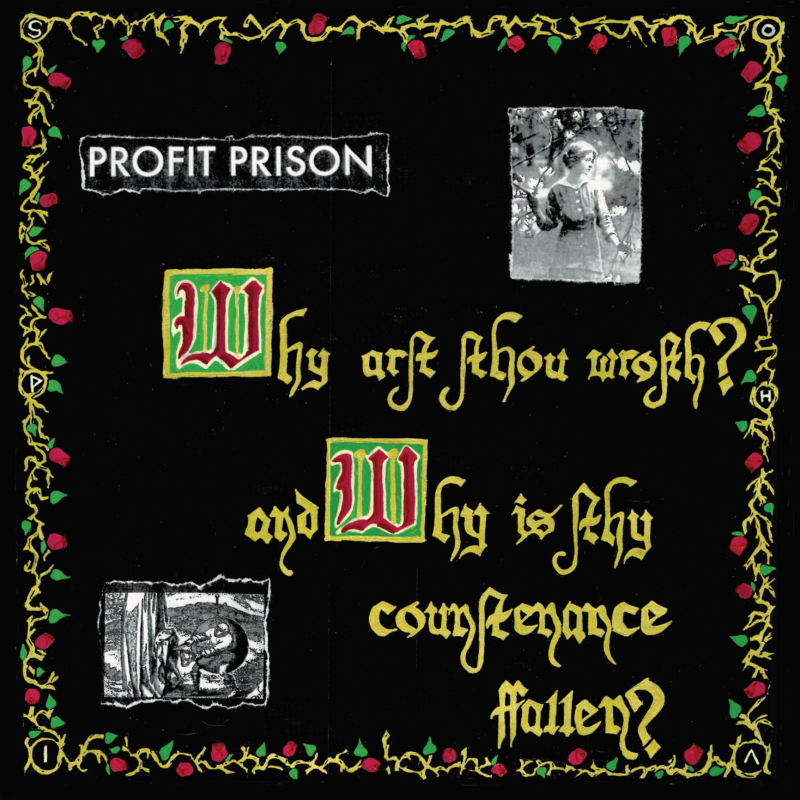
19.11.2026 - Seattle Dungeon Synthpop Project PROFIT PRISON Asks What the Living Owe the Dead in Video for “In Memoriam”
Their lives felt somewhat sound
Though they’d lost control of the outskirts of their town
and I loathe to tell you how it ends
so in silence we bow our heads
There’s something profoundly rotten about a world where people can disappear, families can be destroyed, and the surviving witnesses are expected to carry on buying groceries and paying their miserable bills while history quietly buries the evidence. Human civilization has developed an extraordinary talent for committing atrocities, commemorating the dead, and finding fresh excuses to repeat the process. Somewhere in this grand procession of moral bankruptcy, Seattle’s Profit Prison has found sufficient inspiration to write a disco song about the unbearable weight of collective guilt.
The solo project of Parker Lautensleger, whose musical history includes Anteinferno, Bhereg, Victims Panel, and Excarnated Entity, has spent nearly a decade exploring the more psychologically disturbed possibilities of electronic pop. His latest single, In Memoriam, taken from the forthcoming album Why art thou wroth? And why is thy countenance fallen?, sounds like Bronski Beat wandering into a particularly unpleasant historical reckoning, with electronic pioneer Gershon Kingsley conducting the proceedings from behind an enormous bank of synthesizers.
The arrangement possesses a strange, almost indecent sweetness. Synthesizers trace delicate melodic figures above a measured electronic rhythm, their crystalline repetitions creating the impression of a forgotten European dance record rescued from somebody’s flooded basement. Lautensleger sings with a trembling, distant resignation, his voice occupying the uncomfortable space between Neil Young’s wounded sincerity and the exquisite emotional distress of early synthpop by Das Kabinette, Depeche Mode, and others you might find on the Some Bizzare Compilation. Every syllable seems burdened by information its owner would dearly prefer to forget.
And what dreadful information it is. The lyrics describe a family whose apparently stable existence has been overturned by events unfolding near a border, where some unspecified act of violence has left questions that nobody seems willing to answer. Children inherit uncertainty, the dead receive their solemn acknowledgments, and the living are forced to contemplate the possibility that their own moral identities have been built upon carefully maintained ignorance. The song’s repeated interrogations grow increasingly desperate, suggesting a confrontation with somebody whose participation in an atrocity has become impossible to dismiss. Beneath the delicate electronic flourishes lies the hideous proposition that ordinary people can commit extraordinary acts of cruelty and subsequently spend entire lifetimes inventing explanations for themselves.
In Memoriam‘s synthesizers maintain their patient, hypnotic progression while the words wander into the ugliest corners of human responsibility. You could conceivably dance to this record, which raises some rather uncomfortable questions about the emotional usefulness of disco. Lautensleger leaves those questions unanswered, however, allowing the music to continue its beautiful, merciless rotations while the accumulated weight of memory threatens to crush everything beneath it.
The video takes on a philosophical matter, as though we’re prisoners in Plato’s cave, watching distorted projections of events whose true nature remains somewhere beyond our comprehension. The road stretches onward, the lights assault our vision, and every image seems to conceal a fragment of some dreadful revelation.
Watch the video for In Memoriam below:
Why art thou wroth? And why is thy countenance fallen? is out on January 20, 2027 via Avant! Records. Listen to In Memoriam below and pre-order the album here.
Why art thou wroth? And why is thy countenance fallen? by PROFIT PRISON
Follow Profit Prison:
Instagram
Facebook
Bandcamp
Spotify
The post Seattle Dungeon Synthpop Project PROFIT PRISON Asks What the Living Owe the Dead in Video for “In Memoriam” appeared first on Post-Punk.com.
Source: Post-Punk.com
19.11.2026 - TIEFLADER: neues Album „Jünger des Mammon“ – Releaseparty in Stuttgart
TIEFLADER veröffentlichen morgen, am 20. November 2026, ihr neues Album „Jünger des Mammon“. Die Releaseparty mit Konzert findet ebenfalls morgen im Wizemann in Stuttgart statt. Karten gibt’s für 25 Euro im Vorverkauf.
Mit „Millionen“ hat die Band nun eine dritte Videosingle geteilt:
Zum Titelsong kann man sich seit Oktober ein Video ansehen:
Mit „Shut up and bang your head“ haben TIEFLADER im März die erste Single aus „Jünger des Mammon“ veröffentlicht.
Die Releaseparty mit Konzert findet am 20. November 2026 im Wizemann in Stuttgart statt. Karten gibt’s bereits jetzt für 25 Euro im Vorverkauf.
TIEFLADER Line-up
Patrick Schneider – Gesang
Alex Scholpp – Gitarre
Robert Swoboda – Bass
Benjamin H. Baur – Schlagzeug
Source: Vampster
19.11.2026 - CHAOSBAY bringen ein Doppelalbum raus: „Good“ erscheint im Frühjahr 2027
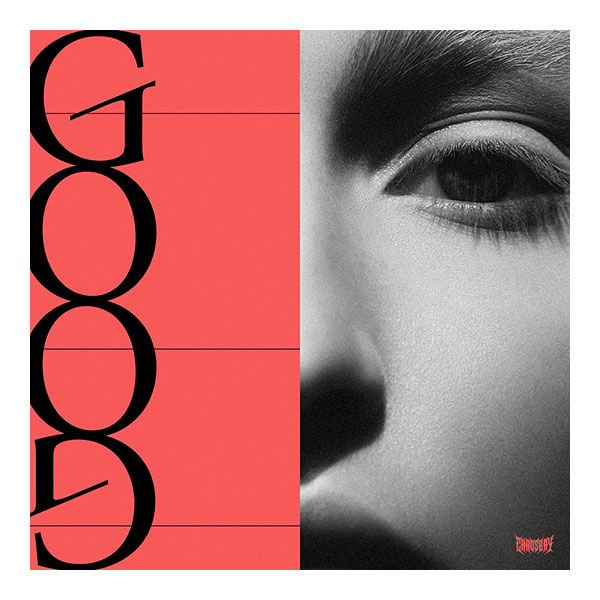
CHAOSBAY haben ein neues Album angekündigt, „Good“ ist ein Doppelabum mit 18 Songs aus zwei verschiedenen Genres:
„Von allen unseren Alben fiel uns ‚Good‘ am schwersten“, erklärt die Band. „Nachdem wir jahrelang zwischen verschiedenen Genres gewechselt und diese miteinander kombiniert hatten, wurde es immer schwieriger, etwas zu schaffen, das sich wirklich neu anfühlte. Aber letztendlich hat es sich gelohnt. Dieses Album vereint unsere moderne Metalcore-Ära und unsere Progressive-Metal-Wurzeln so, dass es sich für uns gut anfühlt. Deshalb fühlen wir uns diesen Songs so tief verbunden. Auf dem langen Weg zu diesem Albums sind wir als Musiker gewachsen und hatten endlich die Chance, all unsere unterschiedlichen Einflüsse zusammenzubringen – das nicht nur eine Floskel. Habt Spaß dabei, jedes Detail zu entdecken. Wir haben viele Easter Eggs versteckt und freuen uns darauf zu sehen, was ihr findet.“
Veröffentlicht wird „Good“ am 12. März 2027 via Metal Blade Records.
Mit einem Video zu „Good“ haben CHAOSBAY nun eine weitere Single veröffentlicht, beim Titelsong des Albums wirkt auch Nastassja Giulia von ENEMY INSIDE mit.
Zuvor teilte die Bands bereits weitere Singles wie „How Does It Make You Feel“?, „Egosystem“ und „The Lost Kids“.
CHAOSBAY „Good“ Tracklist & Cover
GOOD
Loud Tracklisting:
01. How Does It Make You Feel? (Watch)
02. OK
03. Egosystem (Watch)
04. Chemical
05. The Lost Kids (Watch)
06. Monster
07. Bittersweet
08. C-Drive Feeling
09. Good (Watch)
Soft Tracklisting:
01. Good – Soft
02. C-Drive Feeling – Soft
03. Bittersweet – Soft
04. Monster – Soft
05. The Lost Kids – Soft
06. Chemical – Soft
07. Egosystem – Soft
08. OK – Soft
09. How Does It Make You Feel? – Soft
CHAOSBAY Konzerte 2027
11.03. HANNOVER @ Lux
12.03. BERLIN @ Bi Nuu
13.03. PRAGUE @ Café V Lese
16.03. FRANKFURT @ Das Bett
17.03. KÖLN @ Helios 37
19.03. LONDON @ Barfly Camden
20.03. MANCHESTER @ Deaf Institute
21.03. BRISTOL @ The Louisiana
22.03. SOUTHAMPTON @ Heartbreakers
24.03. HAMBURG @ Betty (Headcrash)
25.03. LEIPZIG @ Naumanns
27.03. OBERNDORF @ Easter Cross Festival
31.03. WIEN @ Arena
01.04. NÜRNBERG @ Z-Bau
02.04. KASSEL @ Färberei
03.04. STUTTGART @ Club Zentral
June 11-13: Munich, Germany – Technikum @ Prog Metal Mania
CHAOSBAY Lineup:
Jan Listing – Lead Vocals, Guitars
Alexander Langner – Guitars
Matthias Heising – Bass
Patrick Bernath – Drums
Source: Vampster
19.11.2026 - “Into the Depths I Am Drawn” — KOSMOBERKH Explores the Places We Go to Belong on “Troglobiten in Absonderlicht”
At the edge of the abyss I stand
Into the depths I am drawn
The future without me
Troglobite in bizarre light.
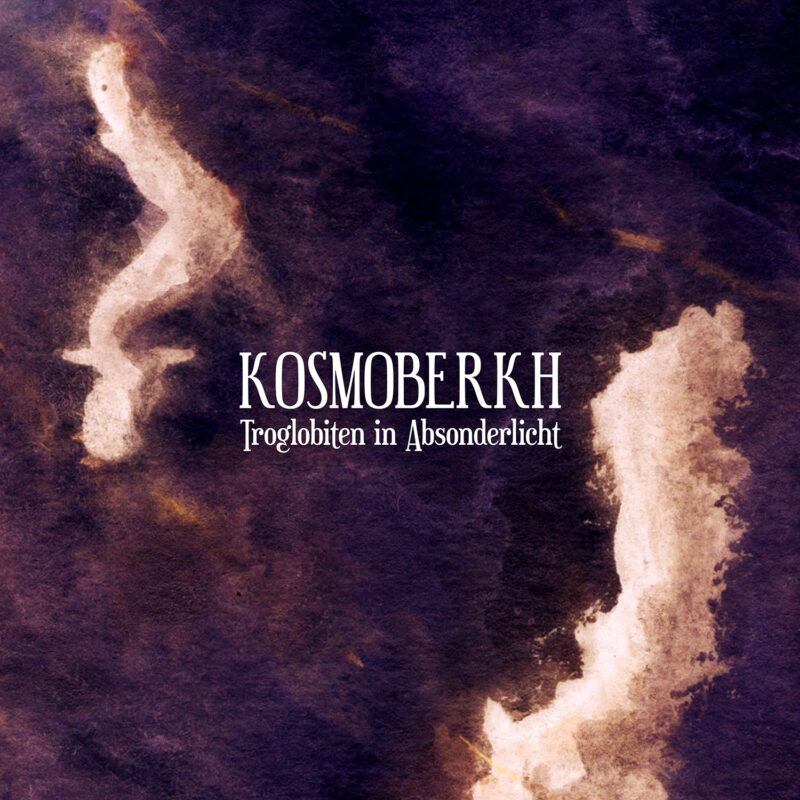
A red light in a fog-filled nightclub lets you see who’s beside you on the dance floor. In a limestone cave, a lamp can reveal an olm, a pale salamander that lives underground. For Hanover-based “singer-doomwriter” David Barteczko, who first played as KOSMOBERKH on an open stage in Oldenburg, there’s a kinship between those two kinds of light. He puts them side by side on Troglobiten in Absonderlicht, a title he translates as “Troglobites in Secluded Light.”
Released November 6, 2026, on Barteczko’s own Zeichenlos Records, the ten-track album is his first since 2018’s oneiroi, which came out under the name Mosaikh. A club gives young people somewhere to make things together and try out how they want to live. Barteczko’s characters are looking for that kind of room under political and economic pressure. Pandemic isolation, war, a changing climate and the lure of conspiracy theories and parallel lives online form the backdrop to the album’s loosely connected episodes.
That first stage was Craftwork Café at Oldenburg’s Metro discotheque, where Barteczko tried out songs between 2011 and 2013. He describes those sets in terms of Stravinsky’s The Rite of Spring and Joy Division’s “Dead Souls,” both evoked by a single acoustic guitar. The 2014 demo Urbild began his recording partnership with Alex Pojda. Barteczko set his voice aside for the instrumental post-rock of Dim Nachttag in 2016 and took up singing again with Mosaikh, the electric trio whose songs about belonging drew on his experience as a Polish migrant.
During the break from KOSMOBERKH, Barteczko played in prog-doom band CMDR RIKR and post-rock group BRUECKEN. He returned to the stage in May 2024, opening for Extra Life at Cadillac in Oldenburg with cellist Jann Michael Engel, whose credits include Anne Clark and Mila Mar. The pair recorded the cello in Göttingen, and Barteczko tracked his vocals, synths, percussion and effects at home. Most of the guitars were recorded at Holodeck Studio, where Pojda co-produced the album with Barteczko and mixed and mastered it.
Barteczko’s acoustic guitar and Engel’s cello are at the center of the record. Synths, electronic percussion and field recordings carry the arrangements into ethereal wave and chamber doom. Barteczko’s reference points range from early Dead Can Dance and Scott Walker’s Scott 4 to David Bowie’s The Man Who Sold the World and Peter Hammill’s In Camera.
Deep strums and a low cello line set the instrumental “Fiz Oblon” in motion. The opener, issued October 16 as the fourth and final advance single, has the pace of a walk by lantern light, with the drums moving steadily beneath the acoustic riffs and Alex Pojda’s bass carrying the rounded weight of gothic rock. Engel takes the cello higher against the guitar before a rubbery industrial darkwave beat takes over for a spell. The cello returns to pick up the melody. The piece is named for the Bippen discotheque where Barteczko developed his taste in music, and he dedicates it to the memory of Pai and Hage. In the single notes, he credits clubs like this one with bringing him to music and to people who stayed in his life.
Barteczko first sings on “Asche meiner Jugend,” in a high, unhurried voice over gentle acoustic guitar. The lyric puts crimson clouds in a skylight and stroboscopes in a room he once knew. He can picture it well enough to feel like a stranger there now. Reverb carries off the ends of his phrases in the chorus, and Engel comes in with a low, grieving cello line. The two instruments find a brisk folk rhythm as Barteczko sings with more force. The quicker rhythm gives him a few bars to dance on the ashes of his youth and ask if anyone can see him glow.
A light chime moves through “Sterngeworden” like bells attached to someone’s dancing feet. The acoustic guitar makes room for clear electric notes to ring, and Engel draws out one of his loveliest melodies. Barteczko’s languid delivery suggests The Replacements and The Cure. The acoustic playing has the intimacy of Nick Drake, and the electric guitar has the soft focus of dream pop. The singer looks to the past for some sense of what lies ahead. In the last lines, he hopes someone else’s longing might carry him home.
Getting home grows complicated on “Zugvogel.” Strings ripple behind the gentle acoustic strum while the cello keeps chugging along, and an electric-sounding quiver unsettles the edges of the arrangement. There’s something of The Cure’s “Catch” in the voice and the acoustic swing, set in a scene that could belong to a David Lynch film. One migrating bird loses its sense of day, night and direction. A second bird’s plumage is a business suit, and its days are a funeral procession. Those small, birdlike sounds leave the flight feeling as though it could take you from one dream, or one life, straight into the next.
There’s a dry click at the end of the guitar strokes in “Hybris.” Barteczko comes in slowly above a deep cello tone, with the deliberate phrasing of someone waking up and deciding he wants out. A brighter melody suddenly picks up the pace, then the playing shifts again into a loose, almost jazzy groove. Earlier figures reappear as quickly as the moods that brought them on. The words make a similar series of turns. One person wants to break free of himself, asks someone else to break free with him, and shudders when the thing they’ve made together breaks free in turn.
The acoustic strum on “Telegramme” sways as though it could stop between strokes, and there’s an ease to Barteczko’s delivery even as he sings about messages falling like ash and people being made to whisper obediently. Christoffer Grunau plays drums, and Udo Kirfel contributes bass. Engel holds a low, steady line before reaching up to accent individual phrases. His playing grows more melodic and climbs higher as the song closes. By then Barteczko is moving between a whisper and a shout, asking the other person to hold his hand and bracing himself for their answer.
The first single, “Stummfilm” (August 14), begins with a cello melody that nearly waltzes, the acoustic guitar keeping step. The introductory figure gives way to a gentler strum, and then the cello bears down again beneath Barteczko’s voice. In the lyric, two lives are bound up in a shared manuscript. He dips the other person’s page in ink, the paper tears, and he plays the images back in his head in silence. Guitar and cello build around him until his voice recedes. Engel takes the melody back with a little more lift to it, and the guitar falls in beside him.
The video reworks F. W. Murnau’s 1926 silent film Faust, bringing the outsized gestures of German Expressionism to the guilt and private fantasies of a relationship that has run out of words.
The second single, “Zypressen” (September 4), starts with a soft strum, a passing synth tone, and an especially tender vocal. Engel takes his time entering. Once he does, the cello zigzags across the guitar part and elaborates on its own melody while the singing pauses. The bow moves faster, and the synth tones darken. When the cello drops away, the voice and guitar briefly have the space to themselves. Engel comes back to carry the melody under the singing, and rain enters over gentle strumming. The close brings distorted electric guitar alongside the cello, and Barteczko’s voice sounds much farther away.
The song follows an exhausted nurse through an understaffed hospital ward, where she tends to cypresses in place of patients. The applause that keeps her awake at home recalls the people who took to their windows to clap for hospital staff during the pandemic. For the video, original art sits alongside paintings, notably the work of Swiss Symbolist Arnold Böcklin, whose cypresses take on an uneasy motion.
The instrumental “Oras Bad” opens with a rush of sound and a chime-like jangle. A soft, guitar-like figure trails into reverb above a low electronic hum. As the rush grows louder, that low tone holds its place with the clarity of one detail in a dream. Ora’s name returns when Barteczko calls for rain on the closing track.
Christof Schlaak’s high piano notes fall far apart in “Petrichor,” the album closer and third single, released September 25. They land like the first drops of rain on stone, with a soft acoustic strum underneath. Engel’s cello falls into step with Barteczko’s aching vocal for a few bars, then moves off on its own. When the electric guitar swells, the space between those sparse notes fills up with cello and piano over Grunau’s drums and Kirfel’s bass. The arrangement feels poised for a downpour. It ends with the electric guitar easing off into something close to a sigh.
Barteczko had planned to end the record with an instrumental until, as he recalls, “the first line escaped my lips.” The person singing it stands at the edge of an abyss, imagining a future that will go on without him. Then he catches the scent of rain. After an album full of people straining to get a word through, “Do you smell the rain?” is a question anyone standing beside him could answer.
The black gatefold vinyl is limited to 120 copies, and both the LP and the digital download are exclusive to Bandcamp. The album is also available on streaming services, including Spotify.
Listen to Troglobiten in Absonderlicht below and order the album here.
Troglobiten in Absonderlicht by KOSMOBERKH
Follow KOSMOBERKH
Instagram
Facebook
YouTube
Bandcamp
The post “Into the Depths I Am Drawn” — KOSMOBERKH Explores the Places We Go to Belong on “Troglobiten in Absonderlicht” appeared first on Post-Punk.com.
Source: Post-Punk.com
19.11.2026 - Veljanov (Deine Lakaien): Neue Single „Take A Knee“ + Album „Shanderilan“

Alexander Veljanov (Deine Lakaien) veröffentlicht mit „Take A Knee“ die zweite Single seines kommenden Soloalbums „Shanderilan“. Alle Infos dazu bei uns!
Source: Sonic Seducer
